HVAC Services
Schedule Heating and HVAC Services in Chicago
By Chicago HVAC King | October 27, 2026
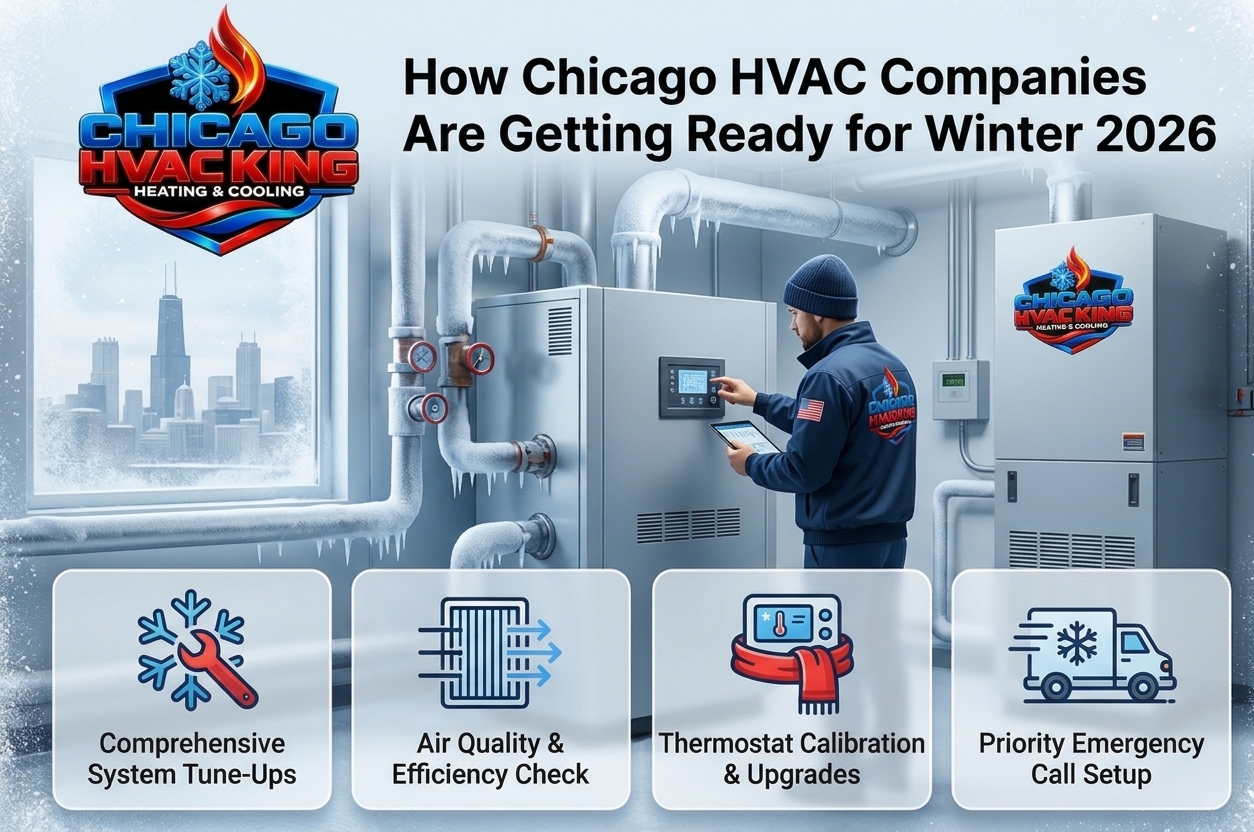
Chicago HVAC companies are getting ready for winter 2026 right now. Trucks are getting stocked, tune-up calendars are filling up, and on-call crews are being lined up for the first hard freeze.
This year comes with a twist. Forecasters are calling for a milder winter than usual. So why is every heating company in town still getting ready like a polar vortex is on the way?
Because in Chicago, one cold week can undo a mild forecast. Here’s what this winter looks like, what the cold does to your heating system, and how local HVAC companies are getting ready. Plus what it all means for your home or business.
What Winter 2026 Looks Like in Chicago
NOAA released its official winter outlook on October 15, 2026. Here’s what it says for the Chicago area:
- Warmer than normal is favored from December through February across the Great Lakes.
- A very strong El Nino is the main reason. Forecasters say it could be one of the strongest on record.
- Less snow is likely. Past strong El Nino winters have usually brought below-average snowfall to Chicago.
- Rain and snow totals are a toss-up. The weather service expects them to land close to normal.
The closest match is the winter of 2015-16. That winter was nearly 5 degrees warmer than normal, with almost a foot less snow.
But there’s a catch. There have only been six very strong El Nino events on record, so forecasters say it’s hard to draw firm conclusions. The National Weather Service in Chicago also warned that even a mild winter will still bring stretches of real cold and rough winter weather.
Good News on Gas Bills
The U.S. Energy Information Administration expects Midwest homes that heat with natural gas to spend about 10% less this winter than last winter. Lower gas prices are the main reason.
That’s good news. But an old or dirty furnace can burn through those savings fast.
Why HVAC Shops Still Plan for the Worst
Chicago has a long memory for cold.
On January 30, 2019, O’Hare dropped to 23 below zero. Wind chills fell to around 50 below. The city stayed below zero for 52 hours straight. The all-time record is even colder: 27 below on January 20, 1985.
Cold snaps like that are what HVAC companies plan around. Here’s why:
- Furnaces fail when they work hardest. A furnace that runs fine at 35 degrees can quit at 5 below, when it has to run for hours without a break.
- Everyone calls at once. When a deep freeze hits, no-heat calls pile up overnight.
- Mild forecasts make people skip tune-ups. That leaves more worn parts waiting to fail on the first cold night.
Forecasts also only go so far. NOAA says a 7-day forecast is right about 80% of the time, but a forecast 10 days or more out is right only about half the time. So HVAC shops plan their crews week by week, not month by month.
What Chicago Winter Does to Your Heating System
Cold air isn’t the only problem. Here’s what local techs see most every winter.
Parts Wear Out From Long Run Times
Chicago furnaces run for months at a time. Igniters crack, flame sensors get dirty, and blower motors and capacitors give out. Most no-heat calls come down to one worn part.
Snow and Ice Block Furnace Vents
High-efficiency furnaces vent through white PVC pipes on the side of the house. If snow drifts or ice cover those pipes, the furnace shuts itself off for safety.
Frozen Drain Lines
High-efficiency furnaces make water as they run. If the drain line goes through a cold garage, crawl space, or outside wall, it can freeze and stop the furnace.
Cracked Heat Exchangers and Carbon Monoxide
Years of heating up and cooling down can crack a heat exchanger. A crack can let carbon monoxide into your home. That’s why a yearly safety check matters.
Dry Indoor Air
Heating dries out the air. That’s why many Chicago homes feel chilly and stuffy even when the thermostat says 70. A whole-home humidifier can help.
Rooftop Units and Unit Heaters on Businesses
Wind, snow, and ice beat up rooftop units all winter. Belts, motors, and gas valves on commercial heaters take a real hit.
Walk-In Coolers and Freezers
Refrigeration doesn’t take winter off. Condensing units that sit outside need the right cold-weather controls, or they can act up in deep cold. Drain lines in walk-in freezers can also freeze and back up.
How Chicago HVAC Companies Prep Before the First Freeze
Here’s the winter playbook good HVAC contractors in Chicago follow.
- Push fall tune-ups. September through November is tune-up season. The goal is to catch worn parts before the cold does.
- Stock the trucks. Shops load up on the parts that fail most in winter: igniters, flame sensors, capacitors, inducer motors, pressure switches, and thermostats. More parts on the truck means more repairs done on the first visit.
- Line up 24/7 crews. No-heat calls don’t wait for business hours. Shops set on-call schedules before the first deep freeze.
- Watch the 7-day forecast. When a cold snap shows up, shops add staff and remind customers to book checkups.
- Get landlords ready. Building owners have to meet the city heat rules, so boilers and furnaces in rentals get checked early.
- Check business equipment. Rooftop units, gas unit heaters, and walk-in coolers get looked at before the holiday rush.
- Test for safety on every visit. Gas leak and carbon monoxide checks are part of every winter call.
- Help with rebates. Gas company rebates on new furnaces end December 31, 2026, so shops help customers get installs done in time.
The Chicago Rules That Shape Winter HVAC Work
The Chicago Heat Ordinance
Landlords in Chicago must provide heat from September 15 to June 1. Once the season is in full swing, rentals must stay at least:
- 68 degrees from 8:30 a.m. to 10:30 p.m.
- 66 degrees from 10:30 p.m. to 8:30 a.m.
Early in the season, until the first night below 45 degrees or October 15 (whichever comes first), the minimum is 64 degrees. Tenants can report no-heat problems to 311, and landlords can face fines of up to $500 a day.
That’s why landlords are some of the busiest HVAC customers in Chicago every fall.
Illinois Carbon Monoxide Alarm Law
Illinois law requires most homes to have a working carbon monoxide alarm within 15 feet of every room used for sleeping. A furnace is the most common source of carbon monoxide in a Chicago home, so test your alarms before the heating season gets going.
Money Help for This Winter
Gas Company Rebates on New Furnaces
The federal tax credit for new furnaces ended December 31, 2025. Gas company rebates are still available in 2026:
| Gas Company | 95%+ Efficient Furnace | 97%+ Efficient Furnace |
|---|---|---|
| Peoples Gas (Chicago) | $200 | $225 |
| Nicor Gas (most suburbs) | $150 | $225 |
The furnace has to be installed by December 31, 2026. For full prices and what changes them, see our guide on new furnace cost in Chicago.
Help Paying Heating Bills (LIHEAP)
Illinois opened its 2026-27 LIHEAP program on October 1. It helps income-eligible households pay natural gas, propane, and electric bills.
- Open since October 1: adults 60 and older, people with a disability, families with kids 5 and under, and homes facing a shutoff
- Opens November 1: all other income-eligible households
- Open until: August 13, 2027, or until the money runs out
Apply at helpillinoisfamilies.com or call 1-833-711-0374. In some counties, LIHEAP can also help homeowners whose furnace won’t run.
Your Winter Checklist
Get your home ready the same way the pros do:
- Book a furnace tune-up now, before the cold snap rush
- Change your furnace filter, then check it every 1 to 3 months
- Clear snow and ice from the PVC vent pipes outside after every storm
- Test your carbon monoxide alarms and swap old batteries
- Put fresh batteries in your thermostat
- Keep the area around your furnace clear of boxes and laundry
- Know where your gas shutoff is
- Save a 24/7 HVAC number in your phone before you need it
If you smell gas, leave your home right away and call 911 or your gas company from outside.
Not sure where your furnace stands? Read our guide: Is Your Furnace Ready for Winter?
Winter Tips for Business Owners
- Get rooftop units and gas unit heaters checked before the first freeze
- Change rooftop unit filters
- Have your walk-in cooler and freezer checked: door gaskets, drain lines, coils, and controls
- Post a 24/7 HVAC contact where your staff can see it
A warm walk-in can cost you a full load of stock. If yours is acting up, read why a walk-in cooler stops holding temperature or see our commercial HVAC and refrigeration services.
How Chicago HVAC King Is Getting Ready
We’ve been getting ready since early fall. Here’s what that looks like:
- Trucks stocked with common furnace parts, so most repairs get done on the first visit
- 24/7 service for no-heat calls
- Free estimates before any work starts
- Gas leak and carbon monoxide checks on every heating call
- Fall HVAC tune-ups and checkups for homes and businesses
- Walk-in cooler and freezer repair for restaurants and stores
If your furnace is already giving you trouble, see our Chicago furnace repair page. For cold rooms, weak airflow, or rooftop heat problems, see heating repair.
Frequently Asked Questions
Will Chicago have a mild winter in 2026-27?
NOAA favors warmer-than-normal temperatures for December through February because of a very strong El Nino. Less snow is also likely. But forecasters still expect stretches of real cold.
Do I still need a furnace tune-up if the winter is mild?
Yes. Even mild Chicago winters bring cold snaps, and that’s when worn parts fail. A tune-up costs far less than an emergency call on a below-zero night.
When are HVAC companies in Chicago the busiest?
During the first deep freeze. No-heat calls jump when temperatures drop near or below zero. Booking a tune-up in the fall helps you skip the wait.
What temperature do Chicago landlords have to keep apartments in winter?
From September 15 to June 1, rentals must stay at least 68 degrees from 8:30 a.m. to 10:30 p.m. and 66 degrees overnight. Early in the season, the minimum is 64 degrees.
Why does my furnace shut off during a snowstorm?
On a high-efficiency furnace, snow or ice may be blocking the PVC vent pipes outside, or the drain line may be frozen. Clear the vents. If the furnace still won’t restart, call for service.
What furnace parts fail most in a Chicago winter?
Igniters, flame sensors, capacitors, blower motors, inducer motors, and pressure switches. Most of these can be fixed on the first visit.
Is there a tax credit for a new furnace in 2026?
No. The federal tax credit ended December 31, 2025. Peoples Gas and Nicor Gas still offer rebates on high-efficiency furnaces installed by December 31, 2026.
Can I get help paying my heating bill in Illinois?
Yes, if you qualify. LIHEAP opened October 1 for seniors, people with a disability, families with young kids, and homes facing a shutoff. All other income-eligible households can apply starting November 1.
Where should I put carbon monoxide alarms?
Illinois law requires a working carbon monoxide alarm within 15 feet of every room used for sleeping. Test them each month and before the heating season.
Will my heating bill go up this winter?
Probably not if you heat with natural gas. Federal forecasts expect Midwest gas heating bills to be about 10% lower than last winter. An old or dirty furnace can still waste gas, though.
Get Your Home Ready Before the Cold Hits
Don’t wait for the first below-zero night. Call Chicago HVAC King at (708) 412-0736 for a tune-up, repair, or free estimate. We’re available 24/7.