HVAC Services
Schedule Heating and HVAC Services in Chicago
By Chicago HVAC King | November 3, 2026
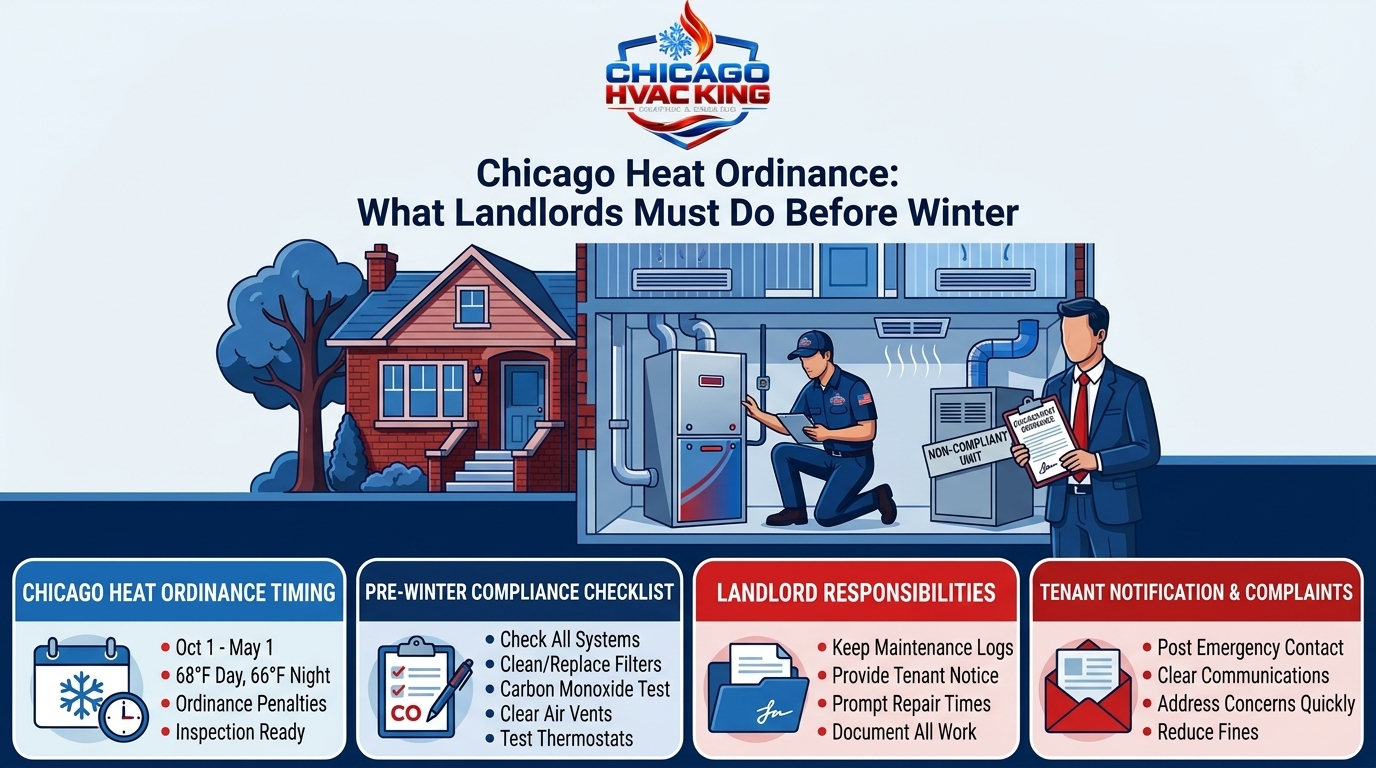
The Chicago heat ordinance requires landlords to keep rental units warm from September 15 to June 1. Heat season is already here. If a boiler or furnace in your building fails, the clock starts on fines right away.
Here’s what the rules say, what they cost if you miss them, and how to stay ahead.
What the Heat Ordinance Requires
For most rental buildings with central heat, units must stay at least:
| Time | Minimum Temperature |
|---|---|
| 8:30 a.m. to 10:30 p.m. | 68 degrees |
| 10:30 p.m. to 8:30 a.m. | 66 degrees |
These rules apply the whole heat season, September 15 through June 1.
Two-Pipe Buildings
In buildings where one system handles both heat and cooling, the minimum drops to 64 degrees at all hours early in the season (until the first night below 45 degrees, or October 15, whichever comes first) and late in the season (from the first May day above 75 degrees). The rest of the season, the 68 and 66 rules apply.
Units With Their Own Furnace
If each unit has its own heating equipment, it must be able to keep the unit at 68 degrees in normal Chicago winter weather. The owner must keep that equipment working, even if tenants pay the gas or electric bill.
Workspaces
Offices and other workspaces must be at least 68 degrees when people are working there. Spaces that need to be cold for the work, like refrigerated warehouses, are exempt.
Where Heat Is Required
Heat is required in every habitable room, meaning anywhere people sleep, eat, cook, work, or relax, plus bathrooms. Closets, hallways, storage areas, and utility rooms don’t have a minimum.
These don’t count toward meeting the ordinance:
- Ovens and stoves
- Water heaters
- Portable space heaters
- Fireplaces
How the City Measures
Inspectors take the temperature 3 feet above the floor and at least 3 feet from an outside wall, with windows and doors closed and any space heaters or stoves turned off.
The Fines
Landlords can be fined $500 to $1,000 per day, per violation. The reason the heat is out doesn’t excuse it. A broken boiler still counts.
Tenants can report no heat by calling 311. Tenants without heat may also have the right to withhold rent under Chicago’s Residential Landlord Tenant Ordinance.
Landlord Checklist for Winter
The city expects owners to inspect heating equipment in late summer. If you haven’t done it yet, do it now:
- Book a tune-up for every boiler and furnace in the building
- Replace filters and check thermostats
- Check flues and vents for blockages
- Test carbon monoxide and smoke alarms in every unit
- Seal drafty windows and doors
- Post a 24/7 HVAC number where your building manager can find it
- Have a plan to contact tenants fast if the heat goes out
If the Heat Goes Out
- Call for repair right away. Every hour counts.
- Tell your tenants. Let them know what happened and when to expect heat.
- Give temporary relief. The city says steps like portable heaters, rent credits, or temporary housing may be considered when it sets fines.
- Use space heaters safely. Keep them 3 feet from anything that can burn, plug them straight into the wall, and turn them off when no one is in the room.
Carbon Monoxide Alarms
Illinois law requires a working carbon monoxide alarm within 15 feet of every room used for sleeping. The building owner must supply and install them. Furnaces and boilers are a common source of carbon monoxide, so check alarms when you check heat.
How We Help Chicago Landlords
- 24/7 service, because heat can’t wait until Monday
- We come out fast, find the problem, and fix it
- A clear price before any work starts
- Efficient techs, with most repairs done on the first visit
- Gas leak and carbon monoxide checks on every visit
We handle furnace repair, heating repair for cold units and weak airflow, and HVAC tune-ups to prevent breakdowns. For mixed-use buildings, see our commercial HVAC and refrigeration services.
For more on getting ready, read How Chicago HVAC Companies Are Getting Ready for Winter 2026.
Frequently Asked Questions
What temperature must Chicago landlords keep apartments?
At least 68 degrees from 8:30 a.m. to 10:30 p.m. and 66 degrees from 10:30 p.m. to 8:30 a.m., from September 15 through June 1.
When does heat season start and end in Chicago?
It runs from September 15 to June 1.
What are the fines for not providing heat?
$500 to $1,000 per day, per violation. The reason for the outage doesn’t excuse it.
Do space heaters count toward the heat ordinance?
No. Portable space heaters, ovens, water heaters, and fireplaces don’t count. Space heaters can be used as temporary backup only.
What if each unit has its own furnace?
The owner must keep that furnace working and able to hold 68 degrees in normal winter weather, even if tenants pay the gas bill.
How do tenants report no heat?
By calling 311. In an emergency, tenants should call 911.
Does the heat ordinance cover offices and stores?
Yes. Workspaces must be at least 68 degrees when people are working there, except spaces that need to be cold for the work.
What should a landlord do first when the heat goes out?
Call for repair right away and tell your tenants what’s happening. Call us at (708) 412-0736. We’re available 24/7.
Keep Your Building Warm and Compliant
Don’t risk daily fines or cold tenants. Call our HVAC company in Chicago at (708) 412-0736 for fast heating repair or a building tune-up. We’re available 24/7 and give you a price before any work starts.